

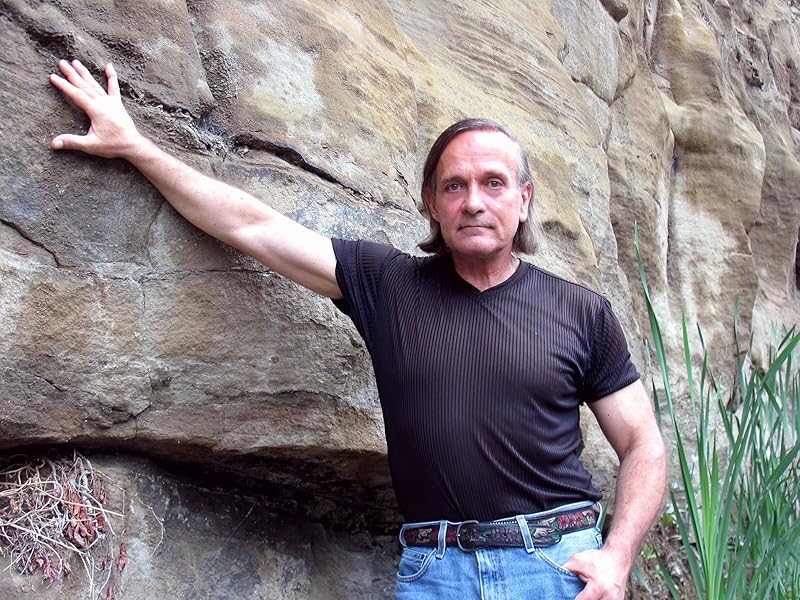
David Nabhan: A Literary Profile in Earth Science and Sci-Fi
A fascinating figure in both popular and scientific discourse, David Nabhan’s work exists at a curious intersection of reportage, scholarly inquiry, and speculative fiction. His literary output, spanning four books on the seismic sciences, countless peer-reviewed papers, and a vast body of op-eds, reveals a mind deeply invested in the forces that shape our planet.
Nabhan’s prose is defined by its accessibility, a quality that has made him a staple across a remarkable breadth of media—from the high-brow pages of Popular Science to the wide-reaching airwaves of the Howard Stern Show. This ability to translate complex subjects, from hydraulic fracking to climate issues, to a lay audience is perhaps his greatest literary achievement.
Yet, his dual life as a science fiction writer suggests a further dimension to his work—a willingness to not only dissect our current world but also to imagine futures shaped by the very forces he studies. This unique blend of analytical rigor and creative speculation positions Nabhan not just as a science communicator, but as a modern-day futurist.
In the following interview, Klemen Breznikar delves into David Nabhan’s work with the author himself.

Hi, thanks for joining me today! Thinwalker is such an intriguing title—and the world you’ve built is even more intriguing. You’ve got nanite-linked hive minds, fiercely independent “Free Rangers,” and the question of what it even means to be human a thousand years from now. Before we get into the weeds, what first planted the seed for this story?
It was a combination of things. The worldwide panic in 2020 and the virulent animosity between those for or against the Covid vaccine played a part in formulating a fictional great divide between segments of a future society. The storyline pits one side only too happy to utilize nano-scale machines operating within their bodies, against free rangers with their motto “death before inoculation.” The mutual hostility and stakes however are exponentially more bitter in Thinwalker, encompassing a grinding and uncompromising series of wars between the two factions.
Then too I’d never read anything in science fiction that made any real sense concerning time travel—ever a staple of that fare, but always bungled as well from a scientific point of view. The work makes a real attempt at managing to build a real, plausible and believable plot upon this amazing concept. The “pulsar portal” in Thinwalker isn’t pure mumbo jumbo, and considering it as a relic from a million year-old civilization, isn’t beyond the pale of science’s limits. If super-advanced beings from a Kardashev III society were to build a time machine, this is one option they may chose.
The central conflict—the hive-linked society versus the Free Rangers—feels eerily relevant to the way we talk about tech, privacy, and autonomy today. Was that a conscious choice, or did you realize the parallels after you’d started writing?
Very much so. The quandaries that are faced in Thinwalker are starting to confound us even now, especially with the explosive influence AI is having, and only destined to be much more impactful and in the very near future. There are cameras everywhere, our phones are pinged and possibly tracked should the authorities deem it appropriate, and the speed of our vehicles in the performance of certain jobs clocked by GPS. Even more personal delving into our collective privacy involve how much should be known about one’s medical conditions in an era of explosive data sharing, and who should have access to it. This is already subject for debate in the present; in a generation or two the most epoch-changing developments humanity has ever confronted may be in store as science could make it possible, for example, for offspring to be customized in the womb. Parents should be the first to grapple with this sea change in natal science, but the government, always eager to insert itself into everything and anything, shouldn’t be expected to resist the temptation forever of engineering its own citizenry.
The question though is more nuanced than it might seem at first glance. Thinwalker’s faction singing the praises of infallible nanites in the collective bloodstream of mankind shouldn’t necessarily have to be seen as a force for ill. There’s something to be said about all citizens’ every moves being monitored; that’s one way for instance to eliminate crime. It’s only that we’ll not know what price will ultimately be paid for the benefits accrued by putting science, knowledge and order before everything. Hence, the simplistic tack of good guys opposing evil is eschewed in Thinwalker since our lives in the far future will be more complex, overwrought, fast-paced and play out in grey areas probably even more than in the realms of black and white. That, in a single phrase, is the book’s theme: does science come before everything?
You’ve spent years reporting on earthquakes, climate change, and other real-world science. How does that background shape your fiction, and do you think it makes your worlds feel more grounded?
It has. Certainly, my claim to whatever fame stems from the fact that I spent two decades—from 1996 to 2016—pointing directly at the empirical evidence that connects gravitational tidal forces as potential triggering events for earthquakes on the San Andreas Fault. I was granted air time and column space in hundreds of the largest and most respected news fonts on the planet to defend that claim. The “earthquake prediction is impossible” mantra, a rigid and centuries-long obsession with Earth scientists, made for a testy interaction with USGS, for example, and others. But in the end, it turns out that one individual sticking to his guns and repeating himself against all comers, even in our modern world today, can sometimes carry the debate. In 2016 peer-reviewed proof was broadcast worldwide in thousands of newspapers—Los Angeles Times, Washington Post, et al—indicating that, indeed, the conjoined gravitational tidal pull of Sun and Moon, working in tandem, can and does act as the final straw on the camel’s back to potentially cause earthquakes to rupture on the San Andreas.
As that relates to Thinwalker, much of what the protagonist faces, he confronts alone as well. He’s placed in situations where he’s got nothing else if not relying on himself, against all odds. That’s a great facet of our human nature; I wanted to showcase that indomitable spirit in the main character of the work.
There are hints at a “terrifying resistance” that’s not going well for the Free Rangers. That’s a pretty dark starting point. Why open the story at a moment when hope is already slipping away?
Our species very often fails to act decisively until push comes to shove, and even afterwards sometimes. But great come-backs are an indelible part of much of our collective histories. “Winners” time and again initiate their celebrations over their defeated opponents, only to be chagrined and horrified to discover that their adversaries have somehow summoned the mettle and courage for one final resistance. There are few more intrinsically and instinctually powerful emotions in the deepest part of our souls than coming to grips with impending disaster yet refusing to go along, no matter the chances. Homo sapiens has been doing that non-stop for the last 330,000 years. It’s imbued to some degree in all of us. And Thinwalker’s protagonist, Enguerrand Duprey, simply won’t throw in the towel. Readers will find themselves rooting for him.
Tell me about Enguerrand Duprey. He’s such an unusual name for a sci-fi hero, and he winds up working as a bounty hunter for one of the galaxy’s most powerful men. What makes him the right—or maybe the wrong—person for such a huge, mysterious mission?
There’s never been a sci-fi protagonist like Enguerrand Duprey. He’s the scion of the most notable family in the Vela Eridani star system, yet now employed as the scum of the galaxy, a “courier,” his family, his inheritance, his legacy all irretrievably lost in The Wars. He wears around his neck the religious triskelion of the most upstanding type of free ranger, yet he winds up killing three people, “or four, depending on how precisely one counts,” by the time the denouement unfolds. After receiving so many disastrous, life-changing blows in his teens, now in his mid-twenties he’s starting to develop a hardly heroic, apathetic side. But when the great challenge of his young life comes bursting in upon him, he rallies with a superhuman courage that will have to impress any reader.
Lastly, his mother died giving him birth. As part of the bounty hunting task imposed upon him by the worst threat held over his head, Enguerrand is sent back in time to the very year of his birth—where he is forced to seek out his own mother, pregnant with him. The interactions between Enguerrand and the mother he never knew, now in an ethereal past that does and doesn’t exist, will wring a few salty tears out of even the sternest eyes reading these passages..
I can’t not ask about the nanites that “impinge on the very thoughts of Homo sapiens.” That’s creepy and fascinating at the same time. What kinds of ethical or even spiritual questions did you want to wrestle with there?
Well, we’re soon as a species to be entering into an uber-sophisticated, shockingly advanced scientific age in which humanity will seem less like mere creatures spawned on the Earth and more like demi-gods. That age is already beginning—with organ transplants, gene splicing, artificial intelligence and a thousand other skills that before now only almighty deities possessed, yet mankind is daring to practice. The eugenics questions raised during the last world war will pale in two or three centuries. In a thousand years mortal humans might be flirting even with immortality. Science has given mankind the keys to heaven, as it were, or to Hell as well.
When you imagined the Free Range, what details mattered most to you? What makes it feel different from the hive-linked civilization—not just in laws and tech, but in the way people live day to day?
You’re right to point out that the difference between the Free Range and Creation isn’t in the technology. Free rangers aren’t luddites; they’re as tech savvy as any of their enemies. It’s more that they see the danger in being enslaved to technology and are wise enough to restrain themselves from leaping head first into something they realize their culture might not be able to weather and still come out being the same. They value science, almost above all—but not above their traditions and their humanity. Enguerrand’s father, for example, still uses horses on his homestead, a hundred light years from Earth, on an enormous latifundia that produces prodigious quantities of wheat and wine for export to neighboring star systems. Almost all the work is done by droids, but he still goes to the trouble of maintaining horses on his estate because, as he tells his son, they are “such noble creatures.” Free rangers imagine themselves the noblest creatures of all—even more lofty than mathematics, science, or existence itself.
The book promises to affect “not one universe, but two.” That’s quite a claim! How do you even begin to write something with stakes that big without it spiraling into chaos?
It was difficult in the extreme to construct an entire civilization—actually three of them, the Home Core, Creation, and the Free Range—with all the details dovetailing in a workable, credible cosmos almost a millennium in the future. The world has changed so much just in our lifetimes, and many of those changes came as complete surprises. Envisioning human society in the far, far future was extraordinarily demanding. The honest answer as to how the project was pulled off is that it required a staggering number of drafts, emendations, and even wholesale re-writes. Thinwalker was as arduous a task as can be imagined.
You’ve said Stairway Press was “courageous” for publishing this. In your Times of Israel piece, you mentioned that some publishers were put off by the finale and the way the story brushes against pious ideas. Why do you think certain themes of faith or deism are still tricky territory in a genre that’s often seen as secular?
I don’t wish to spoil the ending for readers so I’ll choose my words carefully. Publishers aren’t just closed-minded against anything even mildly brushing up against just quasi-religious ideas, but unfortunately in the last decade or two have acquiesced to a whole category of lockstep themes foisted upon them as taboo by a politico-activism that’s veered out of control. Great publishing houses have welcomed precisely what should be anathema to literature, art, and a free press: surrender to loud and pushy self-appointed arbiters of what people can read. Thinwalker is hardly “religious” though; it’s a terrifyingly adult foray into some of the most petrifying aspects of what the universe can be and might hold. It’s broad enough to consider a plethora of mind-boggling concepts—time travel, wormholes, alternate universes, galactic-sized civilizations—and has no problem with allowing an open-door policy with regard to the greatest mystery and paradox of them all: who or what created us and everything.
This isn’t your first rodeo—you also wrote The Pilots of Borealis. How did working on Thinwalker compare to your debut?
Pilots of Borealis was fun to write and it’s fun to read. It takes place mostly on the Moon and is set a couple of centuries in the future. The book’s plot centered around an energy crisis of the future, not a lack of oil though but of helium-3, the fuel for fusion reactors that powers the fictional civilizations on Earth, the Moon, Mars and Titan. The only place in the Solar System where helium-3 can be harvested is on the surface of the Moon. But we’re probably only a few years away from finally getting a real fusion reactor up and running, making this story line hardly an extremely fanciful flight. So it was a breeze to create compared to the labor that went into Thinwalker which required building a world as far in future as we are today looking back on the era of the Magna Carta. That was a daunting task.
You’ve been on everything from CBS News to The Howard Stern Show, that’s quite the range! Do those experiences influence your fiction at all?
Very much so. The mass media sphere—with its show hosts, producers, editors, camera angles, politics, biases, and all the rest—is in many ways a realm akin to “fiction” all unto itself. I’ve managed to have my say on many, many hundreds of television, talk radio, magazine and newspaper venues, and concerning extremely controversial topics to include earthquake prediction, dark matter, climate science, gender issues, war, peace, education, and weather modification. Beyond that I’ve weighed in too on coal seam fires, fracking, water desalination, the nuclear family, veganism, vaccines, skyhooks, the sexualization of children, EM pulse attacks, firearms, crime and police, Israel, the existence of Jesus and Moses, the Rwandan and Yazidi genocides and hundreds of other highly contentious subjects. There isn’t a hot-button topic where science, politics and religion meet which I’ve neglected to address on the public forum.
Consequently, one can’t have achieved any modicum of success in such an enterprise without becoming an expert in one over-arching talent: carefully, almost obsessively, choosing one’s words. No one knows better than I how ingrained is our tendency to err. I’ve made every mistake, put the worst foot forward, utilized the poorest analogies, quoted the wrong statistics—in short, I’ve come to know myself and my own human capacity for blunder, on air and in print, as well as anyone could hope to. And that crucible has resulted in a self-editor that is rigorous, demanding and implacable. I don’t trust myself, except in knowing that I’m quite likely to get things wrong without a long and exacting preparation. It’s my opinion that there’s no such thing as “stream of consciousness” works that result in anything worthwhile unless one contends that it’s possible to elevate the mundane, prosaic, confused and flawed to art. But, indeed, I’ve learned much from crossing swords in the media, and it’s absolutely made me a much better writer.
What kind of research did Thinwalker demand? Any scientific rabbit holes you fell into that you had to drag yourself out of?
Yes, there were plenty. Topping the list was how in the world to build a time machine? Great scientists have banged their heads on this problem, such as Frank Tipler and his Tipler Cylinder. The method I settled upon was one that infringes least upon cause and effect, a machine that only allows the voyager to go back a certain number of years, with that duration limitation built into the apparatus, and never to a time before the machine itself was constructed. Could such a portal actually be built? If unbelievably minute wormholes exist in the chaotic froth of the Planck space at the core of nothingness, and if one of them could be plucked from the vacuum by scientists a million years more advanced than ours today and then augmented and manipulated, such a machine could be a possibility.
Then too there were the quantum cruisers that the characters in the story utilize to flit from star system to star system in a matter of days, traveling many, many times faster than the speed of light. Here too, of course, science had to be stretched past its breaking point. Certainly nothing can outpace light—no thing, that is. But space itself, according to what we know about Dr. Alan Guth’s “expansion phase” just after the Big Bang, expanded billions of times faster than light for the shortest interval, perhaps a trillionth of a trillionth of a trillionth of a second. So topping the list of tough challenges were time travel and breaking the light barrier.

And finally, the ending. I’ve heard words like “deistic bang” and “astounding” tossed around. When readers close the book, what do you hope is still echoing in their heads?
If I’ve done my job the reader should come away with yet another reminder that this universe is more paradoxical, more inscrutable, more terrifyingly enigmatic than it’s possible to imagine. The greatest minds who’ve ever lived among us can’t have glimpsed but the smallest, infinitesimal fraction of what is truly to be seen. There’s no real, solid, thorough understanding of anything, not at the basic level. Yet in spite of that bone-chilling dread and ennui, and right in the face of it, is—us. There’s never been anything like Homo sapiens on Earth and there may not be any species anywhere else like us. What a fire and ice, hot and cold, yes and no, keenly intelligent yet condemned to ignorance state of affairs that combination of humanity and his incomprehensible universe make. There’s a lot of Enguerrand Duprey in many of us, and if the cosmos is looking for a foil for its perplexing, inconceivable self, we’ve every right to believe that mantle falls upon no other entities in all of creation other than ourselves.
Interview and introduction by Klemen Breznikar
It’s Psychedelic Baby! Magazine