

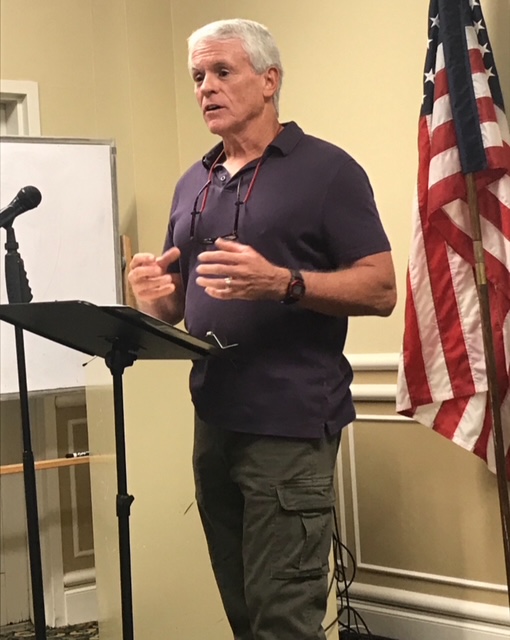
Mike Farris on “Fifty Shades of Black and White”: The Anatomy of a Lawsuit and the Fragility of Trust
In “Fifty Shades of Black and White,” Mike Farris and Jenny Pedroza delve into a legal drama far more profound than a simple lawsuit. This book is a cautionary tale about the importance of written agreements, but it also explores the deeper, psychological aspects of betrayal.
The narrative highlights the fragility of trust when personal friendships are intertwined with professional ambitions. Through Farris’s legal perspective and Pedroza’s emotional account, the book reveals how a friendship forged online between Jenny and Amanda Hayward devolved into a legal battle over the profits of the “Fifty Shades of Grey” trilogy. The title itself is a deliberate contrast, showing how easily the lines between right and wrong can be blurred when one’s point of view is skewed by greed.
Ultimately, the book serves as a powerful reminder that while a partnership may not require a signed document under Texas law, the human cost of a betrayed trust can be immense. It’s a story about a friendship that was sabotaged for financial gain , and a testament to one woman’s fight to expose injustice and rewrite a tragic ending.
Klemen Breznikar’s interview with author Mike Farris offers an intimate look into the creative and legal mind behind his books. The conversation highlights Farris’s unique approach, which masterfully blends his background as a commercial litigator with his passion for storytelling.
“Fifty Shades of Black and White” is presented as a cautionary tale about the importance of written agreements. But can you elaborate on the deeper, more psychological aspects of the betrayal? What does the narrative of the case say about the fragility of trust in an environment where personal relationships are entwined with professional ambition?
To answer this, I first need to explain what the case was about. “Fifty Shades of Black & White: Anatomy of the Lawsuit Behind a Publishing Phenomenon” tells the story, from both the lawyer’s and client’s viewpoints, of a lawsuit involving the original publication of the “Fifty Shades of Grey” trilogy. Here are the basic facts that were presented to the jury at trial:
Jenny Pedroza (Jenny) of Arlington, Texas, and Amanda Hayward of Australia met and formed a friendship online through a fan fiction website. They followed this by creating an entity they called The Writers Coffee Shop (“Coffee Shop”). Coffee Shop initially started as a fan-based website to discuss books, blog, write “fan fiction” stories, and set up a library where authors could publish their stories. It later changed into a business venture, publishing full-length fiction, primarily as E-books and print-on-demand books. Two other women, Lea Dimovski of Australia and Jennifer McGuire, also became a part of the venture.
A written partnership agreement was prepared but never signed by all of the Coffee Shop partners, although it was signed by Jenny and Jennifer McGuire. However, on multiple occasions, various partners, including Hayward, stated in writing that Coffee Shop was, in fact, a partnership.
In 2011, Coffee Shop published the first two installments of the “Fifty Shades” trilogy by E.L. James, “Fifty Shades of Grey” and “Fifty Shades Darker,” and published the third, “Fifty Shades Freed,” in 2012. The “Fifty Shades” trilogy became an online sensation and ended up on the New York Times bestseller list for an extended period of time. Soon, Hollywood came calling on E.L. James, as did major New York publishing companies. In early 2012, Random House made an offer to James to acquire the rights to publish the trilogy. James, of course, had to get approval from Coffee Shop since Coffee Shop owned the publishing rights. Hayward, acting on behalf of Coffee Shop, got approval from the others in Coffee Shop and communicated with James that, “I spoke to the girls this morning, and we are all in agreement that we are willing to let you go but for a price.”
On March 2, 2012, Random House presented a formal offer directly to Coffee Shop to acquire the publishing rights for an advance plus future royalties for a period of three years, with the advance and royalties to be split 50/50 between Coffee Shop and James. After three years, all royalties would go to James. Hayward presented the offer to Jenny and McGuire, who approved it. Hayward then asked Jenny to provide her with the Coffee Shop employer identification number (which had been obtained from the United States Internal Revenue Service for Coffee Shop as a partnership) for use on the Random House contract. However, when Hayward signed the contract as CEO of Coffee Shop, she used her personal Australian tax file number and not the Coffee Shop EIN, and she did not tell Jenny that she had done this.
Hayward also provided Random House with her bank account information in Australia for royalty payments to be deposited, rather than the Coffee Shop’s Texas bank account, again without telling Jenny. Random House signed on March 9, but Hayward did not provide a copy of the agreement to her partners, claiming that she had signed a non-disclosure agreement with Random House. Evidence later established that Random House did not require an NDA, nor did Hayward ever sign one.
After signing the contract with Random House, Hayward also created a series of Australian companies to conduct Coffee Shop’s business, claiming it was for “tax purposes,” and insisted that Jenny sign a contractor agreement with one of them. Jenny didn’t understand that, legally, she was already a partner in Coffee Shop—in fact, that was the very issue that had to be litigated in the lawsuit—so she signed, even though the contract gave Hayward the right to terminate her without cause. She assured Jenny that she would never do so, even swore “on my daughters’ lives” that she wouldn’t, but then did that very thing, kicking Jenny out of the company. Over the life of the three-year deal, Hayward received more than $33 million in royalties from Random House, but she did not account to her partners for any of it.
As attorney for Jenny Pedroza, I filed a lawsuit in Fort Worth, Texas, seeking to establish that Coffee Shop was legally a partnership and that Jenny was a partner entitled to her share of partnership profits from the Random House deal. Following a jury trial, Jenny was awarded a judgment establishing those things and awarding her $10,634,587 as her share of partnership profits, plus pre-judgment interest in the amount of $888,642.87, and attorney’s fees in the amount of $1,725,203, for a total of more than $13.2 million. Hayward’s attorneys filed an appeal, and we settled the case while the appeal was pending.
So, with that factual foundation, back to your question. Under Texas law, a written partnership agreement is not necessary to establish the legal existence of a partnership. The law specifically provides that “an association of two or more persons to carry on a business for profit as owners creates a partnership, regardless of whether: (1) the persons intend to create a partnership; or (2) the association is called a ‘partnership,’ ‘joint venture,’ or other name.”
To determine whether “persons” have created a partnership, the law considers five factors: (1) receipt or right to receive a share of profits of the business; (2) expression of an intent to be partners in the business; (3) participation or right to participate in control of the business; (4) agreement to share or sharing: (a) losses of the business; or (b) liability for claims by third parties against the business; and (5) agreement to contribute or contributing property or money or property to the business. Not all of the foregoing factors must be met, but the more, the merrier. That was the key legal issue at trial.
From a personal standpoint, for Jenny Pedroza, this case was less about legal issues and signing (or not signing) partnership agreements and was more about misplaced trust and what she perceived as betrayal by a friend. That is one of the reasons—in fact, the main reason—why I asked her to collaborate with me on the book. I would present the case, both factually and legally, from a lawyer’s perspective, but I felt that the personal toll it took on Jenny was worthy of exploring. I believe her insights and emotions, particularly as someone who had not been involved in a lawsuit before, are valuable.

The title itself is a stark contrast to the original “Fifty Shades of Grey.” What did you and Jennifer Pedroza intend to convey with this juxtaposition? Is the “black and white” a deliberate commentary on the a priori principles of legal ethics, or does it also allude to the moral absolutism that can arise in high-stakes disputes?
The title is first, obviously, a play on the “Fifty Shades” title, but it is also a commentary on the way that right and wrong can sometimes be skewed to fit one’s point of view. I don’t think that there was actually any gray area in this case. I believe that what was done to Jenny was wrong, both personally and legally. A jury obviously agreed, at least on the legal side of things. Bad things happen all the time that blur the line between black and white, often under the guise of a meritorious end justifying the means (see answers below about Clarence Darrow, although questions certainly arise regarding whether Darrow’s ends were, indeed, meritorious), but sometimes simply because people selfishly think that advancing their own goals and desires, meritorious or not, justifies any means, regardless of who gets hurt.
Beyond the legal specifics, what does the lawsuit reveal about the metaphysics of a partnership? Does it challenge the idea that a partnership is merely a legal construct, suggesting instead that it’s a living entity born of shared purpose, and what happens when that purpose is corrupted?
Texas law recognizes the concept of “partnership by conduct”—if you act like a partnership and hold yourself out to the general public as a partnership, then you are a partnership; see the language I quoted above from Texas law about “regardless of whether the persons intend to create a partnership”—but that is in reference to a legal business entity. The law also recognizes that people may use the term “partner” in a non-legal context. In fact, one of the instructions given to the jury was this:
“The terms used by the parties in referring to their arrangement do not control and merely referring to another person as a ‘partner’ in a situation where the recipient of the message would not expect the declarant to make a statement of legal significance is not enough. The term ‘partner’ is regularly used in common vernacular and may be used in a variety of ways. Referring to a friend, employee, spouse, teammate or fishing companion as a ‘partner’ in a colloquial sense is not legally sufficient to form a business partnership. However, the same term could constitute legally sufficient evidence of expression of intent when made in a circumstance that indicates significance to the business endeavor.”
In other words, one can be a partner, generically, without being a partner, legally. I have no doubt that Jenny and Amanda Hayward considered each other as “partners” in the non-legal sense. They were, after all, friends—at least at one point. They collaborated with each other to write fan fiction and set up the original fan fiction website, visited each other’s homes, and even vacationed together with their families. But the relationship took on a legal significance when they began publishing full-length fan fiction books, signing contracts with writers and distributors, earning income, and paying royalties. They were running a business with the goal of earning a profit.
Hayward went to absurd extremes to explain away her use of the term “partner” when it was clearly intended to be a statement of legal significance. For the trial, we created a demonstrative exhibit that we called “The Amanda Hayward Lexicon” and listed ways she tried to define “partner.” She claimed that her use of the term “partner” was simply a “friendship thing” or a “term of affection” or an “endearment term.” Yet, among other things, she specifically invited Jennifer McGuire to be a “partner” in the “partnership,” telling her she would become responsible for a share of partnership liabilities; stated in a quarterly meeting of Coffee Shop that “I have 3 other partners in this business”; approved Jenny obtaining an Employee Identification Number from the United States Internal Revenue Service for Coffee Shop as a “partnership”; approved the filing of a partnership income tax return with the United States Internal Revenue Service; and approved Jennifer McGuire signing legal documents (including contracts) as a “partner” in a “partnership” called The Writers Coffee Shop.
To the extent that Jenny and Hayward were still friends, were still co-authoring fan fiction, and were vacationing together with their families, they may well have been generic “partners.” But their association to carry on a business for profit, a different aspect of their relationship, was a legal business entity.
How did you navigate the dual narratives of your legal explanation and Jennifer Pedroza’s personal account? Was there a conscious effort to create a dialectic between the objective legal facts and the subjective emotional truth?
I followed the narrative of the lawsuit in a chronological fashion, providing the lawyer’s take on the facts and legal significance. I then wove Jenny’s story in the appropriate places, chronologically, to get her perspective on what was happening. This was a conscious effort to set up a balance between the two viewpoints. It was not really a dialectic, because there was no conflicting or contradictory information. Rather, it was simply two different perspectives on the same events, reflecting a more analytical viewpoint by the lawyer and a personal viewpoint by the client.
I use this book in a class that I created and teach, as an adjunct professor in the Political Science Department at the University of Texas at Arlington, called “Lawyers in Popular Culture.” The class explores how popular culture, as found in books, movies, television, and media, often misrepresents the role of lawyers in our society. In the class, we contrast the behavior of book/movie/TV lawyers with the actual role of lawyers as regulated by the rules of ethical conduct under which they operate. The goal is to provide students with an understanding of the place and function that law and lawyers have in American society, contrasting how they are viewed by popular culture as opposed to the reality of how they should perform. It includes an understanding of the ethical constraints imposed upon lawyers by the justice system and how lawyers operate within that system.
“Fifty Shades of Black & White” offers the students a chance to view a lawsuit from the client’s perspective, particularly one who has suffered a personal emotional toll because it involved a deteriorated friendship. Here’s how Jenny writes about it in the book: “I wanted to believe in Amanda. So, against my better instincts, I did what Amanda said. I signed a contract that I never should have signed, determined to make the company a success. I never dreamed the end was so near. I never thought for one moment that I would have to fire my parents and see my best friend lose her job in the middle of the school year, far too late to get a new one.”
The book ends with a reflection on greed as one of the seven deadly sins. From a philosophical perspective, is greed merely a vice of character, or does it represent a fundamental misunderstanding of value—a failure to see the intrinsic worth of relationships over monetary gain?
Greed can be both a failure of character and a fundamental misunderstanding of value. One of the most misquoted Bible verses is I Timothy 6:10. It’s often misquoted as “money is the root of all evil,” when it actually says “the love of money is the root of all evil.”
In this instance, it was, and still is, remarkable to me that the sequence of events that led up to the lawsuit could happen. With nearly $33 million in royalties paid to Coffee Shop, all of the partners could have been set for life financially through a simple, honest accounting of the profits. However, Amanda Hayward decided that she wanted all of the company’s profits. In the process, she sabotaged a friendship. But, as a lawyer, I’ve seen it before, in other contexts. Almost anything can happen when financial gain is placed over basic human values and relationships.
In the litigation, was there a moment or a piece of testimony that, from your perspective as a lawyer and a writer, transcended the legal argument and revealed a profound, almost tragic, human truth about the case?
A key moment in the timeline of events happened in the fall of 2012. Hayward had been telling Jenny Pedroza all along that Random House had not made any payments yet. That fall, Hayward and her family came to the United States and vacationed with Jenny and her family at Disney World. While they were there, some bills came due to the Writers Coffee Shop, but there were insufficient funds in the company bank account to pay them. Hayward expressed dismay at the financial circumstances, so Jenny volunteered to pay the debts with her personal funds, with the understanding that she would be reimbursed later. Hayward allowed Jenny to do that. It was not until later that Jenny discovered that, just a few days prior to the debts coming in, Hayward had received a $16+ million royalty payment from Random House.
I don’t know that this was a tipping point in the trial, but it was obvious from watching the reaction of jurors to this testimony that they were appalled by Hayward’s behavior.
In “Blowhard,” you dismantle the mythical image of Clarence Darrow. Is your work a critique of Darrow specifically, or is it a broader examination of the “ends justify the means” ethos in the legal profession? Does the legal system itself, with its adversarial nature, inherently reward such behavior?
“Blowhard” is an examination, and perhaps debunking, of the Darrow “myth,” but is simultaneously a commentary on legal ethics in general. Darrow’s belief that the ends justify the means is but one part of a trilogy of core beliefs on which he seemed to operate. The other two were that justice is simply whatever one’s concept of justice should be and that people did not have free will and, thus, had no accountability for their conduct.
There is a popular culture view of Clarence Darrow that he was the “attorney for the damned,” as he was dubbed by muckraking reporter, and Darrow friend, Lincoln Steffens. His reputation during his time, and even today, is that he was a lawyer standing up for the underdog, even if it was at his own financial expense. We know that was Darrow’s reputation because . . . well, because Darrow told us so. He wrote in his autobiography, “My sympathies always went out to the weak, the suffering, and the poor.” He went on to say, “I have always stood with the minority against all popular causes and mass hysteria. . . .” and it is “impossible to deny help to those in trouble and pain . . . .” In pursuing those cases, “I never cared much for [money] nor tried to get much of it or ever had a great deal . . . .” It’s nice, though, when the “weak, the suffering, and the poor” have money. In some of his most famous cases, he was paid amounts that, in today’s money, total in the millions of dollars.
But money is not really the critical issue when it comes to debunking the Darrow myth. Darrow’s lack of ethics has largely been overlooked in today’s popular culture. Almost any list of America’s greatest lawyers will include Darrow somewhere, often at or near the top, primarily because he won. We tend to idealize historical figures and, admittedly, it is often unfair to judge any historical figure by the standards of today. But certain basic principles of legal ethics transcend time—principles like honesty and sanctity of the judicial process. Whether viewed by the standards of the late 19th and 20th Centuries or those of the 21st Century, Darrow’s conduct in multiple cases, including those for which he is best known and highly lauded, falls short. This was not just an occasional aberration but instead represented a pattern of conduct. Pop culture, however, conveniently omits the facts. “Blowhard” exposes them.
You describe Darrow’s belief that ‘truth was expendable.’ What are the long-term consequences, for both the legal system and for society, when the pursuit of justice is untethered from a commitment to truth?
I believe that the justice system is, ultimately, a search for justice—based upon truth. Truth is not expendable. The Texas Lawyers Creed, subtitled “A Mandate for Professionalism,” imposes four distinct duties on lawyers: (1) duty to their clients; (2) duty to other lawyers; (3) duty to judges; and (4) duty to the legal system. Lawyers are also charged not only with “zealously” representing their clients but with those other duties that may, on any given matter, conflict with the duty to clients. Too often lawyers seem to take the position that truth is optional if it is inconvenient for their case. In reality, truth is—or at least should be—sacrosanct in the judicial system. The Texas Disciplinary Rules of Professional Conduct prohibit lawyers from, among other things, making false statements of fact to the court, failing to disclose facts when their disclosure is necessary to avoid assisting in a criminal or fraudulent act, or offering or using evidence that the lawyer knows to be false.
If and when truth becomes expendable, then the pursuit of justice becomes meaningless. It becomes just another game to be played—win at all costs. But, in the end, everyone loses.
“The subtitle, ‘Windbaggery and the Wretched Ethics of Clarence Darrow,’ uses strong, almost polemical language. Was this a conscious choice to shock the reader out of their reverence for Darrow, or do you believe this language is a precise and necessary description of his actions?”
This language was a conscious choice, not to shock but rather because I believe it is reflective of Darrow’s ethics and actions. W.C. Fields is credited with saying, “If you can’t dazzle them with brilliance, baffle them with bullshit.” Darrow could have been the poster boy for the saying. I mentioned earlier his core beliefs that the end justifies the means, justice depends upon what one’s personal concept of justice is, and that people lack free will and thus also lack accountability. Those core beliefs of his add up to a fourth belief: that he was the arbiter to decide the proper outcome of any given case and that he had no limits to what he could do to achieve that outcome.
Adela Rogers St. Johns, daughter of Earl Rogers, Darrow’s Los Angeles attorney in his trials for bribing jurors in the early 20th Century, was highly critical of Darrow and his ethics in her memoir Final Verdict. She wrote, “If the Darrow legend is really founded upon a rock, this eyewitness account I’ve given cannot harm it. If it was built on sand, it should fall like all else that is phony in the history books.” I couldn’t agree more.
I was once asked by a lawyer whether Darrow was a good trial attorney. The questioner qualified the question this way: “I understand that his ethical qualities were abysmal and his desire for attention was unbounded, but did he provide trial skills on behalf of his clients?”
I answered that it was hard for me to separate his ethical and criminal conduct from his legal skills. It’s like the old joke, “Other than that, Mrs. Lincoln, did you enjoy the play?” First of all, it seems that Darrow’s primary trial skill was his overblown oratory. From his four-hour-and-twenty-minute closing argument in Hawaii’s Massie case to his three-day argument in Leopold and Loeb, his almost nonstop torrent of words may well have baffled far more than they dazzled. Darrow’s rambling arguments conjure up the term bloviation, once defined by President Warren G. Harding as “the art of speaking for as long as the occasion warrants and saying nothing.” William Gibbs McAdoo, progressive leader and son-in-law of President Woodrow Wilson, defined it as “an army of pompous phrases moving over the landscape in search of an idea.” As with the W.C. Fields quip, paint Darrow as the poster boy for the expression.
Legal skills do not provide redemption or absolution for a lack of ethics. Instead, lack of ethics taints those legal skills. I don’t believe you can segregate the character of a lawyer from the characterization of that lawyer:
I believe that a dishonest lawyer is a bad lawyer.
I believe that an unethical lawyer is a bad lawyer.
I believe that an unscrupulous lawyer is a bad lawyer.
I believe that a deceptive lawyer is a bad lawyer.
I believe that a corrupt lawyer is a bad lawyer.
I believe that a self-serving lawyer is a bad lawyer.
I believe that a criminal lawyer—a lawyer who is a criminal—is a bad lawyer.
My negative opinion of Darrow holds true.
You are a commercial litigator. How do you, in your own practice, reconcile the need for vigorous advocacy with the ethical boundaries you argue Darrow so often crossed? Where do you draw the line between persuasive rhetoric and ‘windbaggery’?
Persuasive rhetoric is one thing, but I found Darrow to be guilty of what I term “verbal sleight-of-hand.” He often tried to convince judges or juries of something other than the truth and to misdirect from the real issues of a case. As prosecutor William E. Borah argued to the jury in the trial in which Darrow defended labor leader William “Big Bill” Haywood: “The defense lawyers are men of wonderful powers. They have been brought here because of their power to draw you away from the consideration of the real facts in this case, to beguile you from the consideration of your real and only duty.”
In the McNamara case, which involved labor leaders on trial for bombing the Los Angeles Times building in 1910, Darrow’s friend Charles Erskine Wood declined to serve as Darrow’s co-counsel. He wrote that he believed Darrow would “use bribery where safe, perjury where safe. He will manipulate and marshal labor all over the United States as psychological moments to appear in masses and utter threats, arousing a bitterness, a recklessness meant to intimidate a jury in Los Angeles, but thereby arousing a sentiment of clan against persons and individuals more dangerous than dynamite.”
Lawyers have to shape their words and arguments to fit the facts of a case over which they generally have no control. Facts are facts, and you have to play the cards you are dealt—not ones you have up your sleeve. There is nothing wrong with rhetoric designed to persuade, but let that persuasion be based on the truth.
Your novels, such as ‘The Bequest’ and ‘Isle of Broken Dreams,’ often involve legal or moral quandaries. How does your legal background inform your approach to crafting a narrative, particularly in terms of plot structure, character motivation, and the concept of justice within fiction?
When utilizing legal procedures in a novel’s narrative, my legal background is very important. My goal is to accurately portray how a fictional case would actually play out in the real world of the law. I try not to get bogged down in the minutiae of law, however, so sometimes things get streamlined (for want of a better word) to facilitate the story and move the plot forward. However, I still strive for accuracy even within the fictional framework. I also try to provide justice for the characters, of good prevailing over evil and right prevailing over might.
“Isle of Broken Dreams”‘” explores the seamy underbelly of pre-World War II Honolulu. What historical or literary inspiration led you to this setting and this specific narrative of Sadie MacKenzie? Do you see her struggle as a microcosm of a larger societal brokenness?”
My wife and I love Hawaii. We have visited the Islands 17 times, most recently for six weeks in 2024. One of my novels (“Kanaka Blues”) is set in Hawaii, the ending of another (“Manifest Intent”) is set there, and my two true crime books (“A Death in the Islands” and “Poor Innocent Lad”) are set there. Knowing of my love for Hawaii, a friend drew my attention to the historical world of Hotel Street (Honolulu’s red-light district) in World War II, which piqued my interest. After doing some research, I determined that it presented an opportunity for a storyline set in a bizarre, almost unimaginable (yet real) world that I could populate with flawed, but redeemable, characters.
The basic plot of “Isle of Broken Dreams” is this: A young woman arrives in Hawaii just prior to the Pearl Harbor attack, with dreams of being an entertainer, but finds herself ensnared in the world of prostitution in Hotel Street. Although prostitution had technically been outlawed in Honolulu, the pre-war strategy for law enforcement and the military was simply to look the other way, while still enforcing a rigid code of conduct against the “sporting girls,” most of whom came from the mainland. It was, to some extent, a form of human sex trafficking. Ironically, while the two-sided coin of Hotel Street prostitution had female empowerment engraved on one side, degradation and disillusionment graced the flipside. Many of the girls descended into drug addiction, finding that smoking opium or shooting morphine was the only way to cope, mentally, with their plight.
19-year-old Sadie MacKenzie arrived at this bizarrely efficient assembly line of prostitution on the eve of the Japanese attack on Pearl Harbor in December of 1941. With passage booked for her by an “entertainment manager,” who was really nothing more than a procurer for the madams in Hotel Street, she had boarded a passenger ship bound for Hawaii, head filled with dreams of a singing career. The novel tells of her struggles to escape from this life before she loses her soul.
To answer your basic question, yes, I do see Sadie’s struggle as a microcosm of society at large, where people are often exploited by others. In Sadie’s case, she finds a “hero” in the form of lawyer Joshua Sinclair. But sadly, in the real world, heroes are sometimes hard to come by.
The plot of “The Bequest” hinges on the discovery of a brilliant screenplay. This seems to be a meta-narrative about the creative process and the value of art. Does the novel also serve as an allegory for the legal battles that can surround intellectual property?
While the plot of “The Bequest” does involve legal issues surrounding intellectual property, the novel was not intended as an allegory. I was simply trying to tell what I hoped was a good story. The storyline revolves around a two-time Oscar-winning actress whose career is in a nosedive until she receives a brilliant screenplay that was bequeathed to her in the will of a screenwriter who, despondent over failing to sell the screenplay, took his own life. Then, just as the movie based on the screenplay is set to premiere as a projected smash hit, hyped by the events surrounding the demise of the screenwriter, the supposedly dead writer turns up alive and demands a cut of the movie’s profits. After all, if he isn’t dead, then the screenplay never legally passed via the will. But when he is then murdered—really dead, this time—suspicion falls on the actress, who stands to lose the most if she didn’t legally own the screenplay.
The genesis of the story idea is the circumstances surrounding writer John Kennedy Toole and his novel “A Confederacy of Dunces.” Despondent over his inability to secure a publisher, Toole took his own life. After his death, his mother found a publisher to publish the novel posthumously, which was a success, both financially and critically. You can see the obvious parallels to Toole’s life story and the screenwriter in “The Bequest.” I simply took it a step forward with a “what if” question: What if the suicide was a hoax? There are, of course, legal implications if that is the case, but my ultimate motive was simply to tell a good story that has a twist or two.
Across your body of work, a recurring theme seems to be the contrast between appearance and reality. In ‘Blowhard,’ it’s Darrow’s legend versus his actions; in ‘The Bequest,’ it’s a brilliant script’s promise versus its dark origins; in ‘Fifty Shades of Black and White,’ it’s a friendship versus a partnership agreement. Is this a conscious thematic thread, and if so, what draws you to it?
I really hadn’t noticed that as a recurring theme, although now that you ask the question, I see it. Obviously, then, it wasn’t conscious. However, I am a big believer in truth and, in so many of my stories, both fiction and non-fiction, there is a quest to uncover the truth, whether it’s solving a mystery, debunking the myth of the Darrow legend, or exposing injustice. Implicit in that, I supposed, is a contrast between appearance and reality, that things often are not as they appear.
You’ve collaborated on multiple memoirs. What is the ethical responsibility of a ghostwriter or collaborator in shaping a person’s narrative? Do you see your role as simply a scribe, or as an interpreter of another’s life and legacy?
Writing a memoir as opposed to simply writing about someone else’s life imposes different duties. In writing about Clarence Darrow, for example, I was ethically bound to be true to the facts and the historical record. However, I felt free to interpret those facts based upon my knowledge, experience, and value system. Others may disagree with my opinions and interpretations—and that’s fine—but they are based upon the facts I uncovered and interpreted. It’s comparable to litigation, where opposing sides are free to offer their opinions and interpretations of the facts of a case and the law that controls, but they are not free to fabricate facts or make up or distort case law.
With a memoir for someone else, a writer still has the obligation to be true to the facts. I rely heavily upon the recollection of the person whose memoir I am writing, but I also do my own research to confirm facts. The opinions and interpretations of those facts, though, are the opinions and interpretations of the person whose life I am writing about. After all, it is their story, not mine. I also try to spend as much time with them as I can, to not only glean the history of their life, but also to dig into how they felt in the moment, how they construed or understood what was transpiring, and how it affected their outlook, decisions, and future. To the greatest extent possible, I want the reader to see things as the person saw them, understand them as the person understood them, and experience emotions as the person experienced them.
I also want to, as much as possible, capture that person’s voice. I collaborated with Bob Hinkle to write his memoir “Call Me Lucky: A Texan in Hollywood.” Bob is a West Texas rodeo cowboy who got into the movie business in the 1950s as an extra, actor, director, and producer, but also as a technical consultant. His first major project was working on the film “Giant,” adapted from Edna Ferber’s novel. His role was as dialogue coach and technical consultant, to turn the likes of Rock Hudson and James Dean into Texans, from how they talked to how they walked and how they dressed and acted. Bob is pure “good ol’ boy” from Brownfield, Texas, and I was determined to write the memoir so the reader could hear Bob’s voice in their heads when they read. Among the greatest compliments I have ever been paid are an Amazon review that said that Bob is a “likeable ‘good ol’ boy’” whose “Texan personality comes through in his writing,” another that said, “Robert Hinkle’s voice is clear and strong and literally captured by Mike Farris . . . .”, and yet another that said the writing “really makes you feel as if you were sitting on a couch listening to him tell all his stories . . . .”
What is the most significant difference in your creative process when writing a legal non-fiction book like ‘Fifty Shades of Black and White’ versus a fictional novel? How do you switch between these very different modes of storytelling?
The most significant difference is the level of research needed. Of course, fiction still requires a certain level of research to ensure that the basis of the story is factually correct. For example, “Isle of Broken Dreams” is a fictional story with primarily fictional characters, but it is set in a historically factual time and place. Some of the characters are actual historical personages and some of the events are actual historical events. I had to research the world and the time and place to ensure it was historically accurate and that the actions of the real-life characters were at least consistent with history. The fictional characters and fictional plot are my own but, even though I relied on my imagination for them, I was still bound by the real-world setting.
When writing a legal thriller, even though I call on my own background and experiences, sometimes inspired by actual cases I worked on, I still double-check to make sure the law of a fictional case is correctly presented or to ensure proper courtroom procedures. The research may be minimal, but I still have to do it. Although, again, the characters and plot may be creations of my imagination, I want them to be believable.
But when writing non-fiction, I have to do deeper research. With “Fifty Shades of Black & White,” the research was marginally lighter because I had lived the experience, but I still relied heavily on deposition transcripts, the trial transcript, and the court record to ensure that my memory was correct. With “Blowhard,” on the other hand, I had to do extensive research before writing anything. My research included trial transcripts of the cases I discussed, contemporaneous news accounts, Darrow’s autobiography, Darrow’s writings and speeches, and multiple books, both by first-hand observers and after-the-fact historians.
Another difference is that, with fiction, I typically find a character’s voice to write in. That’s easier if I’m writing in first person, because most chapters will be from that lead character’s point of view, so I really just have to find one voice that fits with the character. It’s inevitable, though, that some of my own voice always bleeds through. That’s something I have to watch for and, if I think it’s necessary, edit it out in rewrites. With non-fiction, I am always writing from my point of view as the author, so I can allow my voice to carry the narrative. Sometimes I tend to be a bit irreverent, but I try to keep that to a minimum—unless it suits the story. For example, my writing in “Blowhard” is occasionally sarcastic but I believe that fits with my cynicism of the Darrow legend.
Your website lists your numerous works. Do you see yourself as a lawyer who writes, or a writer who practices law? Is there a point where these two vocations become indistinguishable?
Since I am now retired from practicing law (and have been for nearly nine years), I certainly no longer see myself as a lawyer who writes, if I ever did. When I started writing, I happened to be a lawyer, and being a lawyer provided my first storylines. It also informed my writing, including what I hope was some sort of logic that develops from lawyering. But I believe my writing has always maintained a place separate and apart from my profession. One of the ways the two intersected, though, was that, as a lawyer, I became a better legal writer because of my experience and education as a writer of prose. I learned to keep the “legalese” out of my legal writing and to approach briefing, as well as trial work, as a form of storytelling. When I prepared the Plaintiff’s Original Petition to file the “Fifty Shades of Grey” lawsuit, my goal was to draft a document that, if anyone should happen to read it, they would be able to clearly understand the facts of the case—the story—and the relief we were seeking.
Then, at trial, I approached the presentation of evidence as telling a story. I said this as part of my opening statement: “You’re going to hear two different stories today. One of the stories is that a group of women got together and created a partnership, worked hard, got financially successful with a big hit book, ‘Fifty Shades of Grey.’ Ms. Hayward took off with all the money, kicked Jenny Pedroza to the curb, and she has all the money. The other story you’re going to hear is that Ms. Hayward was a sole trader all along. Always her business, start to finish. The other women worked hard for her out of the goodness of their hearts. Worked for no pay for a couple of years out of the goodness of their hearts. And then when financial success hit, she took the money, kicked Jenny Pedroza to the curb and went off with all the money. Y’all get to decide, after you hear the evidence, which of the first parts of those stories is true. And then you get to decide whether or not you want to rewrite the ending.”
I then broke down our case into the three-act structure that is so familiar to writers, including demonstrative exhibits we showed to the jury to illustrate the three acts. Act 1 was the Set-Up; Act 2 the Complications; and Act 3 the Pay-Off. It looked like this at trial:

In my closing argument, I reminded the jury of the two different stories they had heard. Then I issued a challenge to, in effect, bring them in as part of telling the story: “This is your chance to rewrite the ending.” And they did. The result was a judgment in favor of Jenny Pedroza that totaled more than $13.2 million.
What do you believe is the purpose of writing? Is it to inform, to entertain, to expose injustice, or something else entirely? How has this purpose evolved for you over the course of your career?
I don’t know that I think there is any single purpose of writing, although it invariably, at least for me, involves telling a story. The purpose depends upon what the story is and the writer’s goal in telling it. With some novels, it is simply to (hopefully) entertain with a good story that involves interesting characters. But even then, good writers typically strive to have at least a general theme that runs through the narrative. Examples of theme in some well-known stories include redemption (in the novel and movie “The Verdict,” which starred Paul Newman), sacrifice (in the John Wayne movie “The Man Who Shot Liberty Valance”), and exposing injustice (in the novel and movie “To Kill a Mockingbird”).
With nonfiction, again, telling a good story is important. But it also involves informing, possibly exposing injustice, or telling a cautionary tale that the reader may learn something practical from, as in the case of “Fifty Shades of Black & White.” In my book “A Death in the Islands,” which is the true story of the Massie case in Hawaii in 1931-1932, the goal was to expose an injustice. Five young Hawaiian men were wrongly accused of a sex crime, and it ruined their lives. For one of them, it led to his murder. “Poor Innocent Lad: The Tragic Death of Gill Jamieson and the Execution of Myles Fukunaga” tells the story of a brutal murder of a 10-year-old boy in 1928 Hawaii and the trial and execution of the murderer, but it is, at its essence, a tale of redemption. I described it in the Introduction this way: “Ultimately, this is not a story about a miscarriage of justice or racial inequity or wrongful execution or the curse of insanity. Rather, I think the meaning is found in the final chapters, as Myles Fukunaga spent the last months of his life on death row, and his coming to grips with what he had done, his cry of repentance, his prayer for forgiveness, and finding redemption from a loving God for an act as horrible as the murder of Gill Jamieson.”
If you were to give a single piece of advice to an aspiring writer, what would it be? And is this advice different for someone who comes from a non-literary background, like law?
My advice would be quite simple: write because you have a story you want to tell. Don’t do it in order to get rich or to become famous or for any other reason. The advice stands regardless of the writer’s background. That background may influence and inform how you write and what stories you tell, but you have to find your own voice and write in such a way that it serves the story you are telling.
Given your diverse body of work, from legal analysis to historical fiction, how would you hope your legacy is remembered in the literary world? What is the one idea or theme you want readers to take away from your collective work?
I would like to be remembered as someone who told a good story, who had a positive influence on his readers, and who enjoyed what he was doing.

What’s next for you?
A friend named Paul Heckmann and I are collaborating on a book project that combines Paul’s inspirational personal story with his search, later in life, as an adoptee for his birth family. That search revealed a hero half-brother named John Kearns that Paul never knew, who had been killed in Laos in 1972 as part of the CIA’s paramilitary operations in that country during the Vietnam War—the so-called “secret war.” TCU (Texas Christian University) Press will be publishing the book, titled “Searching for Lone Star: A Tale of Two Brothers.” Here is how I pitched the book to TCU Press:
In 2000, CIA director George J. Tenet revealed the identities of some of those represented by nameless stars on the CIA’s Memorial Wall. Among those was a Texan named John W. Kearns, who initially attended Texas Christian University (where his father was the ROTC instructor) and graduated from North Texas State University with a degree in Far East Studies. John served as a special operations officer in the CIA’s paramilitary operation in Laos during the Vietnam War, the so-called “secret war,” where he was killed in action in 1972. John, whose call sign was, fittingly, “Lone Star,” was posthumously awarded the CIA Intelligence Star “in recognition of his courageous performance under hazardous conditions.”
For years, John’s story stayed pretty well unknown, shrouded in secrecy by classified government documents, and only mentioned in passing in books such as “The Book of Honor: The Secret Lives and Deaths of CIA Operatives” by Ted Gup and “Top Secret Missions Performed by Elite Commo & Intel Specialists” by John E. Malone.
Until now.
In “Searching for Lone Star: A Tale of Two Brothers,” Paul Heckmann, with the assistance of Mike Farris, tells his own personal story of struggles with addiction that, later in life, led him to search for his biological family—and to discover a hero half-brother he had never known: John W. Kearns. While digging deeper into John’s story of heroism, Paul struggled with new, and seemingly insurmountable, difficulties of his own: Tardive Dyskinesia and a broken back.
“Searching for Lone Star” tells the story of two brothers, neither of whom knew about the other until long after the heroic death of the older that inspired the younger to overcome his own adversity. It is a story of sacrifice and inspiration, of love and loss, and, ultimately, of family.
Interview and introduction by Klemen Breznikar
It’s Psychedelic Baby! Magazine