

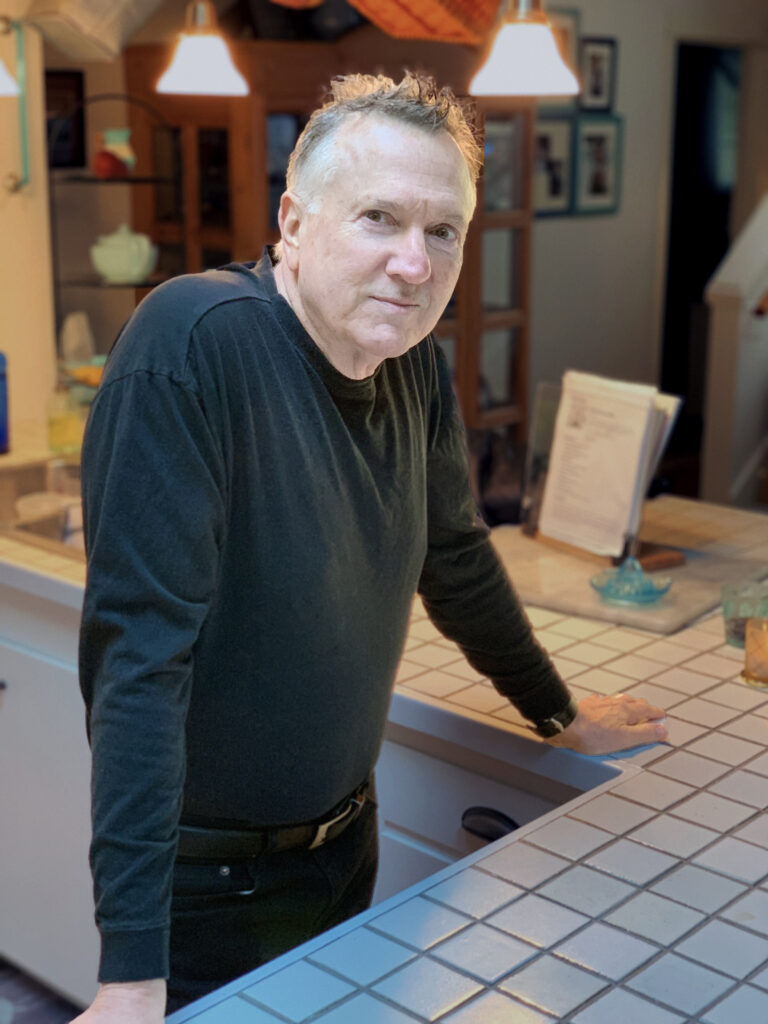
Robert Ferrigno and the Art of Living on the Margins
Robert Ferrigno has always written from the edges of American life, but he has also written from the edges of his own.
A former professor who left academia, a poker player who learned to read the quiet calculus of risk, and a reporter who absorbed the cadences of fact before chasing the freedoms of fiction, Ferrigno embodies the same restless energy that animates his novels. His books, thirteen thrillers translated into eighteen languages, are celebrated for their velocity and for the moral unease that lingers behind the action. Time magazine once called his debut “the fiction debut of the season,” a compliment he tends to undercut with the dry observation that the season was only just beginning.
There is an alluring duality to Ferrigno’s work. On the surface, his stories move with the clean precision of genre writing. Beneath that, however, they circle deeper philosophical questions. What does loyalty look like in a world designed to erode it? How does a person navigate the tension between desire and duty? When does survival demand the surrender of something essential? His characters often inhabit the borderland between self-interest and sacrifice, and Ferrigno treats their flaws not as narrative devices but as invitations to consider the nature of choice itself.
Living in the Pacific Northwest, Ferrigno splits his time between the videogames industry and the solitude of novel writing, a pairing that reflects his fascination with the interplay between constructed worlds and human impulse. He jokes about wanting to lose twenty pounds and track down a near mint copy of “Space Western #2,” yet these small longings feel of a piece with his broader themes. They reveal the curiosity and appetite that have guided him through several careers and continue to shape his voice. In conversation, as on the page, Ferrigno is a writer drawn to the mysteries that define us, both the grand and the intimate.
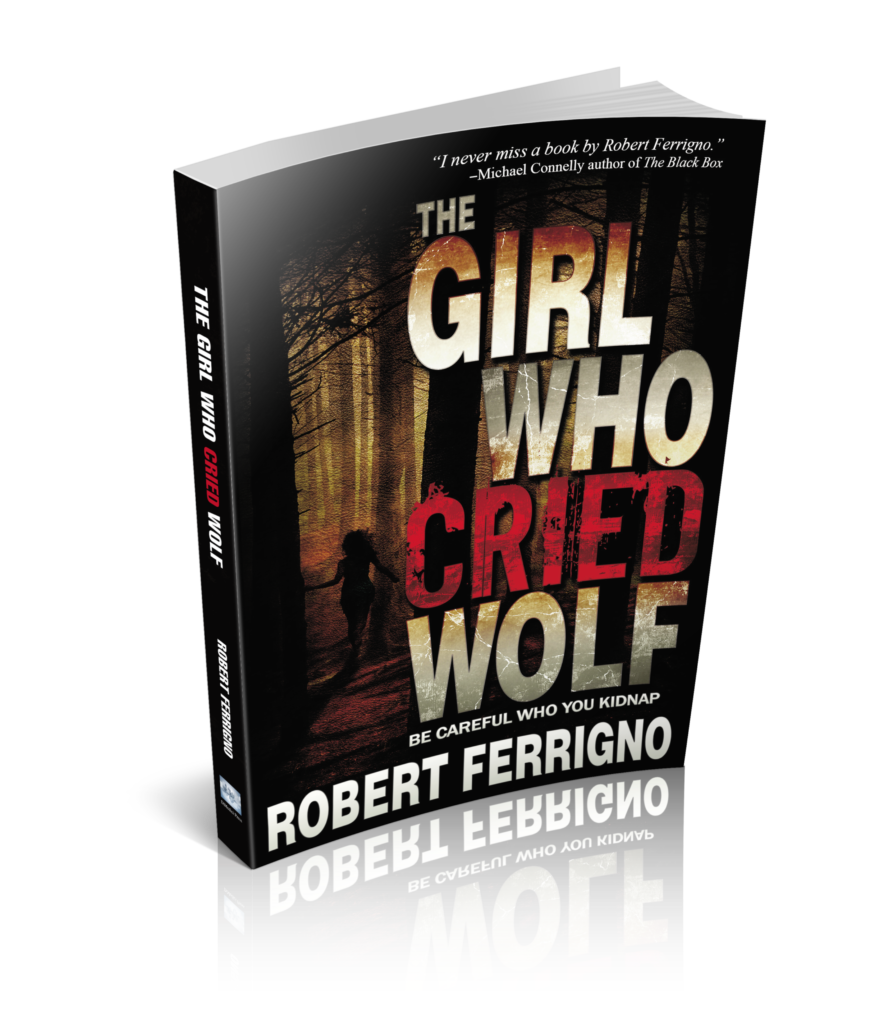
In “The Girl Who Cried Wolf,” you present a protagonist, Remy Brandt, who is initially defined by her professional success and a certain cynical self possession. Her journey, however, forces a radical re-evaluation of her identity. To what extent do you see the thriller genre as a vehicle for profound character transformation, and how do you subvert the trope of the damsel in distress to create a more complex, modern heroine?
Robert Ferrigno: Yeah, thrillers, because their action involves putting protagonists in jeopardy, whether moral peril or literal danger, allow characters to reveal their true nature, to themselves as much as to others. A day at the office is routine until a fire alarm goes off, or you discover your boss is cooking the books, and then you find out who you really are. Routine is a luxury or a tranquillizer or an opportunity. When I was at the game studio at Amazon, we got regular classes in the best responses to an armed individual on the premises. Which I thought was interesting information, but it also led to looking at your co workers with a more discerning eye. Like who is more likely to snap out… the person sobbing in the designated quiet room or the serious guy in the lunchroom, squeezing a precise line of ketchup on each French fry. Maybe best to eat at your desk.
My own preference in protagonists is not the buffed out ex merc who can make a blowgun out of a ballpoint pen, but a more average person who rises to the occasion and discovers skills and strengths they did not know they had. Sometimes brains and a sense of humor are the deadliest weapons. Remy is one of my favorite characters. Her first line is “How much further to Bumpkinville” as she deftly speeds her Porsche up a winding mountain road. Her arrogance made me laugh, but I liked the way she handled herself dealing with risk. I knew she had possibilities.
“We swim in an ocean of misinformation, both accidental and deliberate.”
“The Girl Who Cried Wolf” is a title rooted in a well known moral fable. In your novel, you apply this fable not only to a single character’s past but also to a broader societal context where truth, particularly in the digital age, has become a fluid commodity. How do you view the relationship between individual deception and the crying wolf of a culture grappling with misinformation, and what message are you attempting to convey about this erosion of trust?
I love this question. Self deception is more than a coping mechanism but a primary survival skill. If we knew our true place in the universe… I am smiling, thinking of one of my favorite writers, William Burroughs, who when asked what the title of “Naked Lunch” referred to, said it was the moment that one realized what was at the end of your fork. Self deception can be positive, because recognizing our own self deceptions, and it is plural, allows us the chance to transcend them.
A culture of deception and misinformation is a very different thing, because it goes to the heart of the question, who or what can you trust. We swim in an ocean of misinformation, both accidental and deliberate. There is big money in control and control is built on misinformation, and crying wolf pays the best. Keeping people scared allows someone to step in and say, do not worry, I will take care of it.
Do you trust doctors now? Really. Law enforcement. Professors. Are you paying attention. Do you trust your government, no matter who is in charge. Fortunately, trust in all institutions has fallen. When institutions lose power, individuals gain autonomy. Most of us were smarter when we were children and said, you are not the boss of me.
Remy Brandt is a character who subverts the classic damsel in distress trope. Her journey is not one of passive waiting but of active, aggressive self liberation. Was this a conscious deconstruction of genre archetypes, and how did you navigate the challenge of creating a protagonist who is both a victim of circumstance and a formidable, morally ambiguous force
The eco terrorist kidnappers, Glenn and Eli, think Remy is a classic victim, a weak little rich girl, but they have no idea who they are dealing with. I do not consciously deconstruct archetypes, that would make my characters marionettes. Instead, I create the framework for the characters, get to know them, and then they express who they are through action and dialogue.
When Remy first wakes up on a platform high up in an old growth cedar, rather than being cowed, she berates them for changing her out of her designer clothes, mocking them for getting a good look.
When she says she has to pee, Eli hands her an empty two pound coffee can.
Remy hefted the can. “You better be kidding.”
“It is no big deal,” said Eli, “Julia Butterfly Hill lived for over a year high up in a redwood named Luna.”
The coffee can bounced off Eli’s head.
Remy smiled at the sound of the can falling through the branches.
When I typed this I smiled too, thinking well, that is Remy. And I cannot wait to find out what she does next.
The novel is described as a swift thriller and a wickedly funny satire of the more fuzzyheaded wing of the environmental movement. Can you elaborate on the use of satire as a narrative tool within the high stakes world of a thriller. How do you balance the humor with the genuine tension and danger, and what is the responsibility of an author when using real world movements as the basis for fictional antagonists?
I do not set out to write satire, which I think often degenerates into a mannered, lofty and smug point of view. A manipulation. A lot of TV series that get written about by the smart set fall into this category to me. I watch an hour and go, okay, yeah I get it. You are clever. Scooby fucking Doo. Satire reveals the hand of the writer. What I hope to achieve is to reveal the soul of the characters. The bad guys in my work usually have a warped point of view, but it is a valid point of view true to their personality.
The first time we meet the kidnappers in “The Girl Who Cried Wolf,” Glenn is on the beach in Southern California watching the waves as Eli surfs. It is a gorgeous day, sun, blue green water, seagulls screaming overhead, but that is not the way Glenn sees it.
The winds blew up from the south, straight off the San Onofre nuke plant, scrambling Glenn’s DNA, singeing his bone marrow. If he ever wanted to breed, which he did not, he would probably father some two headed retard.
“Southern California rules,” said Eli, emerging from the surf, blonde and tan and beautiful. “The ocean… you cannot beat it.”
“I hope you kept your mouth closed,” spat Glenn. “You are going to swallow a condom out there someday.”
I love my bad guys, and they are often the characters that surprise and crack me up the most. I think my bad guys are genuinely scary because they are committed, they are of a single piece operating within their own moral framework. I do not have to balance the humor and the danger. They are inextricably entwined.
As to the question of the responsibility of the writer when using real world movements within fiction… the responsibility of the writer is strictly to the work. That is all that matters. Another quote from another of my favorite writers, Joan Didion, the writer is always selling someone out.
You live in the Pacific Northwest, and “The Girl Who Cried Wolf” is set in a national forest there. This setting is more than a backdrop, it becomes a character in itself, both beautiful and brutally indifferent. How does the unique ecosystem and cultural landscape of the Pacific Northwest influence the tone and themes of your work, and how does it challenge or enhance the genre of the urban crime thriller?
I like your phrase beautiful and brutally indifferent. One of the great things about the Pacific Northwest is that within an hour drive you can be in the mountains, on an island or deep in old growth forest.
In context of the novel, the deep woods function like the slave who rode in the chariot of a victorious general greeted in Ancient Rome. The general, crowned with laurel leaves, his path strewn with flowers as the crowd shouted his praises, while the slave whispered in the general’s ear, you are just a man, not a god.
There is a moral perspective that the primeval world gives to our endeavors. You are only human, not a god. It is called hubris, and once we lose the perspective that the natural world offers, all kinds of nasty things emerge. In the case of this book, it is the idea that we can protect nature by kidnapping a rich girl whose even richer daddy will deed a few hundred thousand acres of old growth timber. Good luck with that.
“My characters and I share the storm that is the world.”
Your work is often praised for its strong sense of moral outrage and compassion. Given the amoral or even anarchic nature of many of your characters, how do you maintain this moral framework. Do you believe the author’s role is to pass judgment on their characters, or merely to expose their flaws and let the reader draw their own conclusions?
My characters and I share the storm that is the world. I have plenty of outrage, more than is probably good for me, but I do love the storm. I do not pass judgement on the characters and I am not really sure that my creative perspective would call them mine. The reader is on their own to draw conclusions. I would be happy if they enjoyed the ride and felt they had met some people they did not know before, but somehow recognize.
Critics have compared your sharp, biting dialogue to that of Elmore Leonard. Beyond Leonard, which authors or screenwriters have been instrumental in shaping your distinctive style, particularly in the way you craft dialogue that is both humorous and laden with menace?
Elmore Leonard remains the cornerstone of my career and the goals I strive to achieve. Writing that is clean, clear and honest, and with fine dialogue. I interviewed him when I was a reporter, worst interview of my life. I was so intimidated by his work that my questions were alternately sycophantic and insulting. He just smiled. Rushing for the hotel room door, I handed him a chapter of my two years in progress novel and he called me the next day and said it was wonderful and if I ever finished the damn thing he would blurb it. Which he did. He said to call him Dutch, which is what his friends did, but I never could bring myself to do it.
In no particular order, I love Franz Kafka, William Burroughs, Robert Crumb, Neal Stephenson, Oriana Fallaci, Joan Didion, Ronan Bennett of Top Boy and Steven Knight of Peaky Blinders.
Your background as a newspaper reporter is a well known part of your story. What specific lessons from journalism, the pursuit of facts, the observation of human behavior under pressure, do you carry over into your fiction. Conversely, what freedoms does fiction afford you that journalism never could?
Journalism taught me to pay attention, to be quiet and let people reveal themselves in the most mundane manner, which is usually more revelatory than their own personal headlines.
As to the freedoms… My father was a very practical man. When I called him and told him that I had quit the newspaper and had sold my first book, my father, who really liked my articles for the paper, was very disappointed. He said, so you just sit around and make things up. What kind of job is that. I told him, Dad, what I am writing now is more true than anything I ever wrote for the newspaper.
Truth is the ultimate freedom.
You have had a multifaceted career as a college professor, a professional poker player, and now, working in the video games industry. How do these seemingly disparate experiences, the academic pursuit of ideas, the strategic psychology of poker, and the interactive narrative of video games, manifest themselves in the architecture and themes of your novels?
I have also worked as a day laborer after those times that I ran into a better poker player. I was always hired to pour concrete or unload freight cars because I was the only one showing up at five in the morning for work who was not drunk. I am not sure there is a common thread to all these career choices, maybe it is curiosity. Using a shovel to mix concrete in a wheelbarrow, when done properly, yields a very sensual slurry that I found fascinating. A great workout too.
I was a Philosophy major and got a Masters of Fine Arts, usually ranked as the two most useless degrees, but I learned to intellectually smell horseshit, a most useful skill. I liked jobs with an element of risk, which I believe in. Taking risks is a way to expand the soul, there is that Philosophy degree leaking out, and writing novels is a leap into the unknown with lousy chances of landing on solid ground. If you realize that taking the leap is success enough, then it does not matter where you land.
The characters in my novels are all risk takers, from lovers and drug dealers to petty criminals to cops to environmental terrorists. They are all pushing their boundaries, searching for something that is just out of reach.
In some ways, writing video games is even more of a risk than writing novels, because the financial stakes are so much higher. You write a bum novel, all it costs is time and paper. Games cost forty million dollars and up. The last game I worked on cost over one hundred million dollars. Fail at that and heads are rolling on the river.
Crime fiction, at its core, is a study of consequence and, often, a search for justice or redemption. In “The Girl Who Cried Wolf,” justice is pursued not by the state, the FBI is uninterested, but by an ex cop with a short fuse. What does this vigilante style pursuit of justice suggest about your view on institutional authority versus individual agency in the face of wrongdoing?
It says everything about my views on institutional authority versus individual agency. Institutional authority is not about justice. It is about process. A bureaucratic construct straight out of Franz Kafka. Shuffling papers, endless delays, taking plea bargains, and on to the next case. There is no emotional investment in dealing with wrongdoing by the state. Crimes are recalibrated by dollar amounts, evidence that might exonerate someone doing hard time grinds slowly and mistakes are rarely corrected. It is only when individuals get involved, whether a cop or an attorney or a journalist or a common citizen, that the drive for justice overcomes the process.
The three knucklehead environmentalists are painted with a broad, satirical brush, yet they also drive the plot’s central conflict. Could you discuss the challenge of creating antagonists who are simultaneously comically inept and genuinely dangerous. What psychological traits did you focus on to make their actions both plausible and frightening?
Everyone is convinced that they are the good guy. We are all the one fighting the good fight. You made me do it. What choice did I have. You see courtroom snippets on YouTube and people being sentenced for the most heinous crimes, a lot of times they are smirking at the victim’s families or mocking the judge. Even if they say they feel really bad and I have learned from my mistakes, you know this is bullshit. They shot their husband or murdered their boss or beat a stranger to death for cutting them off in traffic, but in their heart, the other guy had it coming. I am poor, I am rich, I am not taking any more crap from anyone.
Comically inept and genuinely dangerous is inextricably bound together, one intensifying the other. The inability to see the consequences of our actions, the absolute certainty that we are justified in what we have done, is the most dangerous thing on the planet, from beatdowns at the Waffle House to invading foreign countries.
“The Horse Latitudes” was praised for its title and its evocative connection to a historical and geographical concept. “The Girl Who Cried Wolf,” by contrast, is a title that relies on a pre existing moral narrative. What is your philosophy behind titling your books, and how do you decide between a more literary or a more direct, genre based title?
Titles are very hard for me. The Horse Latitudes came after I had sold the untitled half manuscript, and I always struggle. My secret is to not think too much and see what happens, kind of my philosophy of life. So, it is not really a decision for me. I trust my unconscious, which usually knows more than I do.
You have been nominated for an Edgar and won a Silver Dagger. What do these accolades mean to you personally, and how do they impact your creative process, if at all. Do you feel any pressure to replicate past successes or to break new ground with each new project?
Awards mean that someone, somewhere liked what you did. That is pleasurable. It is also pleasurable when a reader writes to tell me they enjoyed one of my books. I am always seeking to push my skills and creativity with the next project, but I do not look back. Like Satchel Paige said, something might be gaining on me.
“The Silver Dagger” was a unique pleasure. It was for a short story I wrote based on an obscene joke my favorite uncle told at Christmas when I was seven years old and did not understand until ten years later. All I knew was all the adults laughed and my mother covered my ears, too late, while laughing hardest. When I told my uncle about the award he wanted to know if it paid any money. I told him it did. He asked for a cut. I did not give him a penny.
The thriller genre has evolved significantly since your debut in 1990. How do you see the genre today, and what new tools, from social media to modern surveillance, have you found most compelling or challenging to integrate into your storytelling?
Yeah, it was a lot easier for thriller writers in the days before ubiquitous surveillance cameras, facial recognition software, phone location tracking and DNA analysis. In the past writers could get away with solving crimes by interviews, observation and deduction. Colonel Mustard committed the murder in the library with a candlestick holder. Now writers have to turn themselves into forensic specialists.
Sherlock Holmes never had to determine whether a sex crime was committed by a secreter, and the cops on The Wire never administered a paraffin test to determine if a suspect had gunshot residue on their hands. It is a problem. In the book I am currently working on I have used the latest science to finesse the issue. With AI, deep fake videos and audio getting better and better, it is easy to posit that in the near future surveillance videos and other forensic evidence can be spoofed and consequently called into question in court.
On the bright side, there is a really good TV show from Poland where a group of online crime buffs crowdsource to solve crimes that the local police cannot. So every problem births one or more solutions. It just makes the narrative challenge more interesting for the writer, and hopefully for the reader.

Okay, so you have said you would love to drop twenty pounds and score a near mint copy of “Space Western Number Two”. That is the kind of goal setting we can all get behind. But here is the big one, what is the real payoff of the writing life for you beyond the pages, the deadlines, the coffee stains, and the glory. And while we are at it, what is your ultimate dream crossover, your work mashed up with any comic, show, or universe?
The real payoff of the writing life is feeling the characters come to life. I worked on what became “The Horse Latitudes,” my first book, for two or three years and it was just flat. I had so many doubts. Then one day as I was working I heard a minor character talk, heard his voice as clearly as if he was in the room with me. I wanted to cry because I knew it was going to be alright.
My job is setting the stage for the narrative, what the French poet Baudelaire called moving the furniture around, planning things, outlines, character sketches and so on, and then after all this work, having the characters come to life, doing all the hard work while I sit around banging away on the keyboard and laughing because the lines they are coming up with are so much better than my outlines and sketches.
Once you get the characters breathing it is the most exquisite pleasure in the world. That is why God is so happy. God has a great sense of humor. Unfortunately for us it is mostly slapstick and irony, but that is the God we have.
My ultimate crossover dream… it would be one of my books as a game. Games like BioShock, Fallout and The Last of Us, that is as good as it gets. As to my other dreams… I have still not located that near mint Space Western Number Two, but on my office wall is a framed very fine Cowboy Love. So far, so good.
Interview and introduction by Klemen Breznikar
It’s Psychedelic Baby! Magazine